
Why Are Jordans so Expensive? An In-Depth Guide
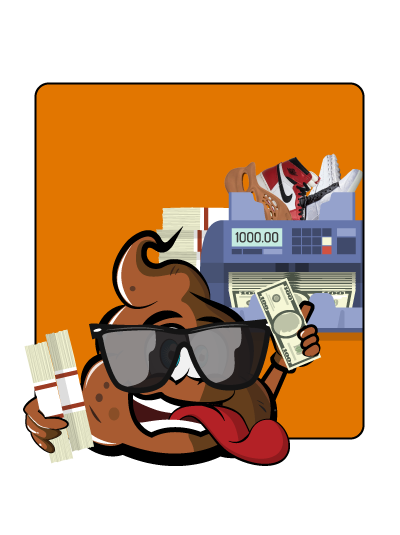 Why are Jordans so expensive? Air Jordans have a rich and exciting history as the Michael Jordan shoe. Each shoe produced during the star’s active career in the NBA has a rich history of wins, losses, nostalgic experiences, and memories. The Jordan sneakers were a big part of young people in the 80s and 90s. And the parent company, Nike, has done a fantastic job keeping the shoes alive through the decades.
While buying a new pair of Air Jordans today is pricier than other standard basketball shoes, it’s the reselling of older versions where the shoes really shine.
Let’s dive into the main reasons why Jordans are so expensive both on the retail and the resale markets.
Why are Jordans so expensive in Retail?
Michael Jordan
Perhaps one of the biggest reasons Jordans are expensive is who they’re named after. And let’s face it, the most successful celebrity basketball player ever? That’s an expensive name to acquire for your brand. It’s also pretty expensive to keep him as a spokesperson. This kind of celebrity association turns the sneakers into immediate gold.
To prove my point is the Jordan 12 Flu Game. This specific sneaker that Jordan wore during his 1997 NBA Finals “Flu Game” was recently sold for $1.38 million at an auction.
Cultural Significance
Two words: basketball community. Especially the 80s/90s NBA when the streets were empty, and families were taped to their TV sets during game time. Imagine these kids not growing up to adore Jordan sneakers.
Initially, the NBA was not aboard and they banned the shoe. The game’s rules at the time stated that sneakers must be white with some colors of the team’s jersey. They fined Michael Jordan $5,000 for every single game he wore the Air Jordan 1s to. Nike paid the fine, gambling on the publicity and notoriety, and the gamble paid off. Nike had hoped to sell $3 million worth of Air Jordans at the end of the four-year deal. In the first year alone, they made $126 million. All of this adds hype and a “cool factor” behind the shoes, making them superior.
Prime Material
Let’s begin with the obvious here, Jordan sneakers are high-quality, durable sneakers. Compared to other sneakers, Jordans use significantly more materials in their makeup. Mainly because they are bigger, offer more support, and have more cushion than others. (But does that sacrifice the fit?) Also, Air Jordans have a reputation for withstanding the abuse of the basketball court, and Michael Jordan proved that by using them during his games.
But the main point: Air Max Technology. After Michael Jordan suffered a foot injury that ended his season prematurely, he wasn’t happy. He was even considering switching to Adidas (imagine that had happened?). That’s when Nike acquired Tinker Hatfield.
Hatfield is prominent for his Air Max Technology, which brought Air Jordans to a new level. It brought new cushioning and support to the foot while keeping its rigid form.
How They’re Produced
Although Air Jordans are made in China, they are not cheap shoes. These are not your typical mass-produced court sneakers. A lot of thought and engineering goes into every release, and each release is different from the other. Some buyers even have their shoes custom-made for them. Because a lot of thought goes into the details and engineering, it naturally becomes a more expensive process. Nike hires some of the best shoe creators and designers in the market to work on their shoes. They also include Michael Jordan and pay for his advice. Read on for more info on who makes Air Jordans.
Why are Jordans so Expensive in Resale?
Scarcity
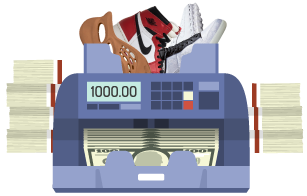
The main reason these babies soar high on the resale market is that there just isn’t enough for everyone. That’s part of being a luxury brand— there isn’t sufficient Jordan production to satisfy the high demand. By creating scarcity, the brand attracts customers with emotional pull marketing and FOMO. After that, limited production keeps prices and interest in the shoes high.
Moreover, sneakerheads hoard Jordans through ‘backdooring’ by buying the shoes in bulk before the general public can even get their hand on a pair (using sneaker bots). They then wait for the shoes to sell out on official sites, hike their prices, and re-sell. This is especially common with any release that is either limited or extremely hyped.
A Collectible Sneaker
Every Jordan sneaker is unique in its appearance. And don’t get me started on the mind-boggling colorways that fans can never get enough of. Every time we think “That’s it, they’ve conquered every colorway we can think of”, BAM! A new one drops! And they always differ enough that those who already have a pair of Jordans will want to have a new pair. Then a newer pair after a newer pair.
And because of their history in basketball and their association with Michael Jordan, they’re also a sports collectible.
Then come the older “retro” Jordans. Older Jordans are highly prized, particularly the ones that saw their release during Michael Jordan’s basketball career. These are the shoes with a lot of history and stories behind them. These shoes appeal to various collectible markets. Many people want to get their hands on them. And with only a few available at a time, it drives the price up even more. That goes for new releases, too. Everyone wants to get their hands on a new release because it might be the next big collectible a few years down the line.
Why are Jordans so Expensive —Exclusivity!
Air Jordan is a famous brand name that most people want to be associated with— a statement shoe. When you buy one, you also pay for the exclusivity rights. Nike also partners with other luxury brands such as Dior to produce limited-edition sneakers. And what’s more exclusive than a merger of two top-of-the-line luxury brands to make a statement?
The same goes for Jordan Brand collabing with A-rated celebrities. What’s more exclusive than associating yourself with the biggest stars from every domain? This brings us to our next point.
Celebrity Influence
Fans want to relate to their favorite celebrities, and Nike got that loud and clear. They started doing so by hiring Michael Jordan. Yet, throughout the history of Air Jordans, their top-notch marketing campaigns often included other celebrities. One of the most memorable is teaming Michael Jordan up with Spike Lee. The result? One of the most memorable commercials in sneaker history.
Today, they continue to work with the biggest names from inside and outside the industry. This ensures a wider customer base and even wider brand awareness (not that they need it).
Some of the biggest Jordan collabs of our day are Drake’s, Travis Scott’s, and Eminem’s. Here’s a guide on the rarest ones.
How to Make Money on Air Jordans?
First and foremost, buy on release. I cannot emphasize this enough! The cheapest time you can buy new Air Jordans is when they drop. You can expect resellers to drive up the price significantly as time goes by. To get a pair of new Jordans, you’ll want to follow its release schedule closely. It’s a constant race of who gets there first. And it’s almost always the Nike bots who do. So just get yourself one! And you know who’s a great contender? The Shit Bot, my dear.
But if you’re not into the botting game (why tho?) you’d probably need to visit local retail stores. Arrive early on its release date and know exactly where you need to go to get your hands on a pair.
Also, keep an eye out for retro releases. Nike knows that people are reselling their older versions of shoes for ridiculous prices. They obviously want a piece of that pie. So, they often release retro versions of previous shoes. These are sneakers that mimic the look or design of an earlier release, but they’re also often updated or changed in some way to stand out.
You can expect these pairs of sneakers to be more expensive than other versions. That’s because Nike knows that nostalgia sells.
Conclusion on why are Jordans so expensive
Lastly, these sneakers have a bountiful history and reputation for rebellion and luxury. They offer a certain exclusivity level, incomparable to other footwear of their type. All while maintaining a very high level of quality and durability in their materials and technology.
With two competitive collectible markets like sneakers and sports, it’s no wonder that Air Jordans sell out like crazy. It’s also the reason reselling Jordans generates loads of cash.