
Sticky vs Rotating Proxies for Sneaker Bots: Which Is Better?
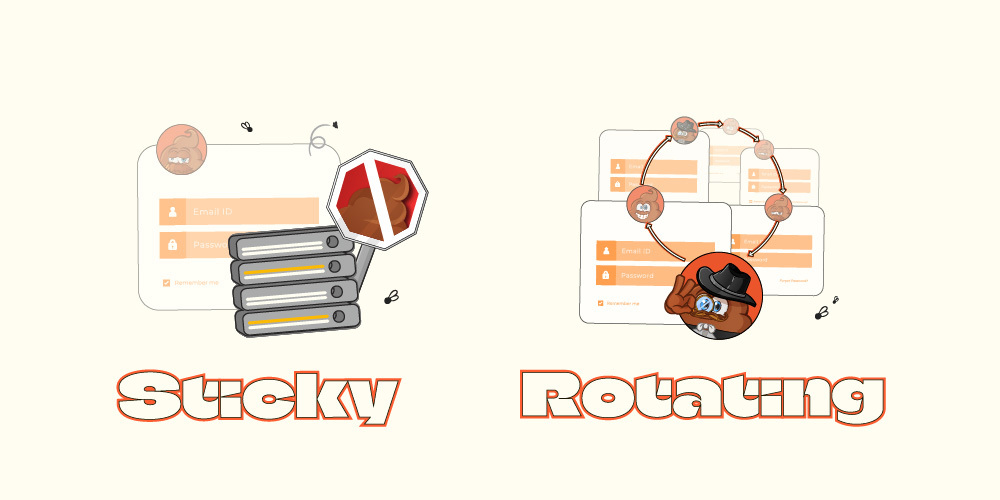
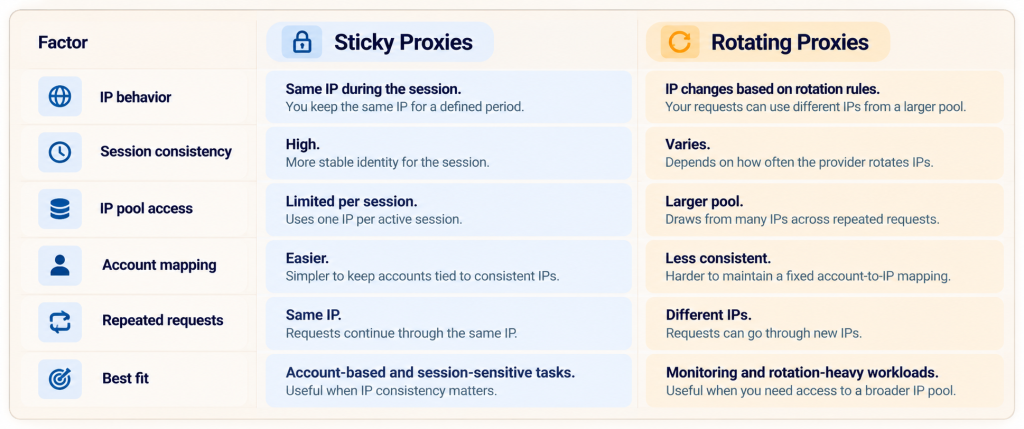
Sticky proxies keep the same IP for a set session, while rotating proxies switch IPs based on the provider’s rotation rules. For sneaker bots, sticky sessions make sense when IP consistency matters. Rotating proxies make more sense when you need access to a larger pool of IPs across repeated requests.
Neither is automatically better. Your retailer, accounts, tasks, proxy quality, location, and IP reputation still matter. That matches what we’ve covered in our 2026 sneaker proxy guide and, more recently, our Nike proxy guide.
What Are Sticky Proxies for Sneaker Bots?
Sticky proxies assign you an IP and keep it for a defined session instead of changing it with every request.
Think of it as keeping one lane open for a task. If Task A starts on IP A, the goal is for that session to stay on IP A until the session expires or gets changed.
That consistency can be useful with account-based tasks. For example, TSB can bind proxies to accounts when you use Set Proxies in Nike tasks, according to our current Nike task configuration guide.
Just remember that “sticky” doesn’t mean permanent. How long an IP stays assigned depends on the proxy provider and product.
What Are Rotating Proxies for Sneaker Bots?
Rotating proxies switch the IP behind your connection according to a provider’s rotation rules.
That could mean a new IP for a new request, session, or configured interval. The point is access to a pool rather than holding one address indefinitely.
This becomes useful when you’re making repeated requests and don’t want everything coming from one IP. Sneaker bots can generate plenty of traffic when you run multiple tasks, which is why proxies are such a basic part of a proper setup.
Our sneaker proxies guide explains the problem pretty simply: running dozens or hundreds of tasks through a single connection can make that traffic much easier for retailer systems to identify.
Are Sticky Proxies Better for Nike Accounts?
Sticky sessions can make more sense when you want a Nike account to maintain a consistent proxy session, but the proxy type alone will not determine your results.
Here’s a simple example. Say you’re running 20 accounts with 20 dedicated sessions:
20 accounts ÷ 20 sessions = 1 account per session
That setup is easy to map and troubleshoot. If one session starts throwing connection errors, you know exactly where to look.
But don’t turn that into “sticky IP = guaranteed W.” Our Nike proxies guide makes the bigger point: IP reputation, location, consistency, accounts, proxy quality, and your overall setup all matter.
Are Rotating Proxies Better for Monitoring?
Rotating proxies can be useful for repeated monitoring requests, but the right choice depends on how the monitor and retailer behave.
TSB monitors can track products or SKUs and let you configure proxies, task counts, and delay timeouts. For example, a 5,000 ms delay equals 5 seconds between requests in the current monitor configuration.
That matters because rotation isn’t the only variable. Request frequency matters too.
If you’ve got a large pool, rotation gives repeated requests access to different IPs. If the workflow needs continuity, aggressive rotation can work against you. So don’t rotate just because you can.
Do Rotating Proxies Make Your Sneaker Bot Faster?
No. Rotating an IP doesn’t automatically make a sneaker bot faster.
Rotation tells you when the IP changes. Speed tells you how quickly the connection responds. They’re different things.
A huge rotating pool can still have slow or unreliable IPs. A sticky session can still be quick. And either can throw errors when an IP is dead, burned on the target site, or sitting in the wrong region.
That’s why we recommend testing proxies before drops. Our current sneaker bot errors guide lists dead, burned, and wrong-region proxies among the common reasons tasks stall or time out.
Should You Use Sticky or Rotating Proxies?
Use sticky sessions when maintaining one IP matters to the task, and use rotating proxies when access to a broader IP pool matters more.
You don’t have to pick one proxy behavior for your entire setup either. Account-linked tasks can have different needs from monitors or other repeated-request workloads.
The important part is matching the proxy to the job. Check the IP source, location, reputation, session behavior, speed, and the retailer you’re running.
Sticky vs rotating proxies for sneaker bots isn’t really about finding one winner. It’s about knowing when you need consistency and when you need rotation. Get that part right, then test the setup before the drop.
Sticky or Rotating, Your Setup Still Has to Cook!
Whether your proxies are sticking around or constantly rotating, having the right overall setup can make all the difference when the next limited drop arrives. With 1M+ items secured and $50M+ in profit generated by members overall, TSB has the track record to back the talk.
If you’re ready to keep your sneaker setup moving in the right direction, make sure your TSB key is ready when the next opportunity comes around.