
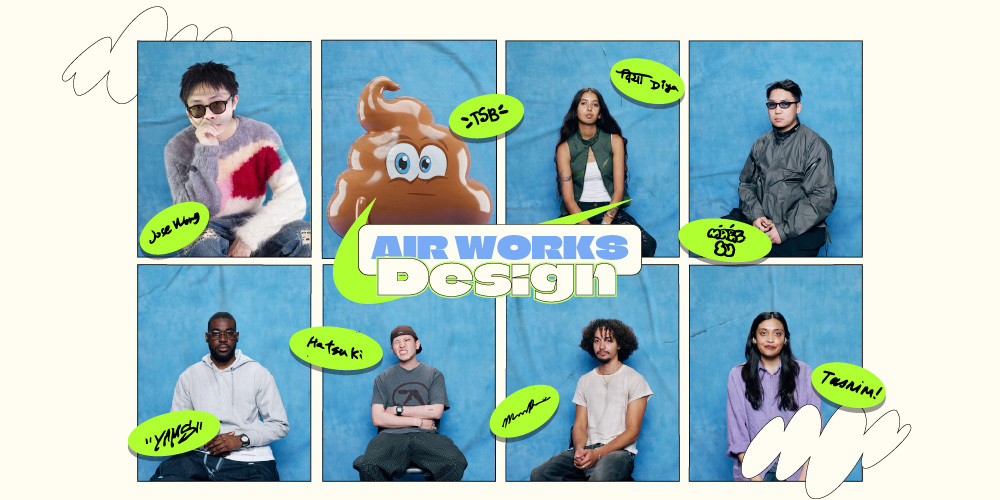
The Nike Air Works Design Program isn’t positioned like a sneaker release cycle or a traditional collaboration pipeline. It behaves more like a system, a design framework built to rethink how footwear is created, tested, and eventually brought to market.
Rather than focusing on a single silhouette, the program operates as a structural shift inside Nike’s broader innovation ecosystem. It reflects a growing interest in modular design, digital prototyping, and production methods that move beyond traditional tooling.
Earlier Nike innovation eras, from Flyknit to ISPA, each introduced new ways of thinking about construction. Air Works continues that trajectory, but pushes it further into fully digital and additive manufacturing territory.
A Closer Look Inside the Nike Air Works Design Program
At its core, the Nike Air Works Design Program is a development initiative focused on exploring next-generation footwear creation through advanced manufacturing processes, including 3D printing.
In collaboration with partners such as Zellerfeld, the program explores how footwear can be designed as a digitally modeled object first, then physically produced through additive manufacturing systems rather than traditional assembly lines.
This shift removes several conventional limitations: stitching constraints, material-layering restrictions, mold dependency, and multi-step factory assembly.
Instead, design becomes a direct translation from digital form to physical object. The result is a workflow in which experimentation happens faster, and iteration becomes more fluid.
Why Nike Is Moving Toward Digital Manufacturing Systems
The introduction of the Air Works Design Program reflects a broader industry shift toward production models that prioritize flexibility and sustainability.
Traditional sneaker manufacturing relies heavily on: multi-part construction, overseas assembly chains, material waste from sampling, and fixed tooling costs.
Digital manufacturing systems like 3D printing introduce a different logic: on-demand production potential, reduced material waste, faster prototyping cycles, and localized manufacturing possibilities.
Nike has been gradually exploring this space through experimental platforms and design incubators. Air Works represents a more structured evolution of those earlier experiments.
The Role of Zellerfeld in the Ecosystem
A key technical partner in this initiative is Zellerfeld, a company specializing in fully 3D printed footwear systems.
Unlike traditional sneaker production, Zellerfeld’s process focuses on single-material construction, fully digital shoe modeling, zero stitching design, and a print-to-wear manufacturing flow.
Within the Nike Air Works framework, this collaboration serves as a testing ground for how performance, comfort, and scalability can coexist in fully printed footwear.
Rather than replacing existing Nike production systems, it functions as a parallel innovation channel.
From Air Max to Air Works: A Structural Evolution
Nike’s innovation timeline shows a gradual shift in how footwear concepts are developed.
- Air Max introduced visible cushioning systems
- Flyknit introduced engineered textile construction
- React refined foam responsiveness systems
- ISPA explored adaptive and modular design language
- Air Works moves into fully digital manufacturing logic
What makes Air Works different is that it doesn’t just redesign a shoe… it redesigns the process of making the shoe itself.
That distinction places it closer to industrial design infrastructure than traditional sneaker design.
Air Works and the Future of Air Max Day
Recent reporting has connected the Nike Air Works Design Program to future Air Max Day initiatives, including experimental releases potentially aligned with upcoming innovation showcases.
Rather than treating Air Max Day purely as a product drop moment, Nike appears to be using it as a platform for showcasing future-facing design systems.
This positions Air Works as: a concept incubator, a testing environment, and a preview of manufacturing direction.
It shifts Air Max Day from celebration into experimentation.
Why This Matters Beyond Sneakers
The significance of the Nike Air Works Design Program extends beyond footwear culture.
It reflects a larger industry trend toward:
- digital-first product design
- localized production models
- sustainable manufacturing exploration
- reduced waste prototyping systems
In that sense, Air Works isn’t just a Nike initiative. It’s part of a broader shift in how physical products may be designed and manufactured in the future.
The sneaker industry is simply one of the first visible testing grounds.
Final Take
The Nike Air Works Design Program represents a quiet but fundamental shift in how Nike approaches innovation.
It doesn’t rely on silhouette reinvention or retro storytelling. Instead, it focuses on the invisible systems behind footwear creation: the tools, workflows, and technologies that shape what a sneaker can become before it ever reaches a shelf.
If previous Nike eras defined how sneakers look and feel, Air Works is focused on how they are made in the first place.
And that makes it less of a product story… and more of a production story.
If you’re interested in anything sneaker-related, from daily drops to how to cop, check out the TSB blog for the latest insights, release info, guides, and daily updates.