
The Pokémon franchise, launched in 1996 by Nintendo, Game Freak, and Creatures, has grown into one of the most valuable entertainment brands in the world. From video games to anime and merchandise, Pokémon has maintained a strong cultural presence for decades. However, in the past two years (2024–2026), Pokémon cards have seen a massive resurgence in popularity, fueled by nostalgia, social media exposure, and the rise of collectibles as alternative investments.
This renewed demand has brought millions of new collectors into the hobby, but it has also made understanding Pokemon Cards Rarity more important than ever. Knowing how rare a card is directly impacts its value, desirability, and long-term potential.
What Does Pokemon Cards Rarity Mean?
Pokemon Cards Rarity refers to how often a card appears in a set. The rarer the card, the harder it is to pull from booster packs, which usually increases its value. Rarity is identified through symbols, numbering, and design features, typically located near the bottom corner of each card.
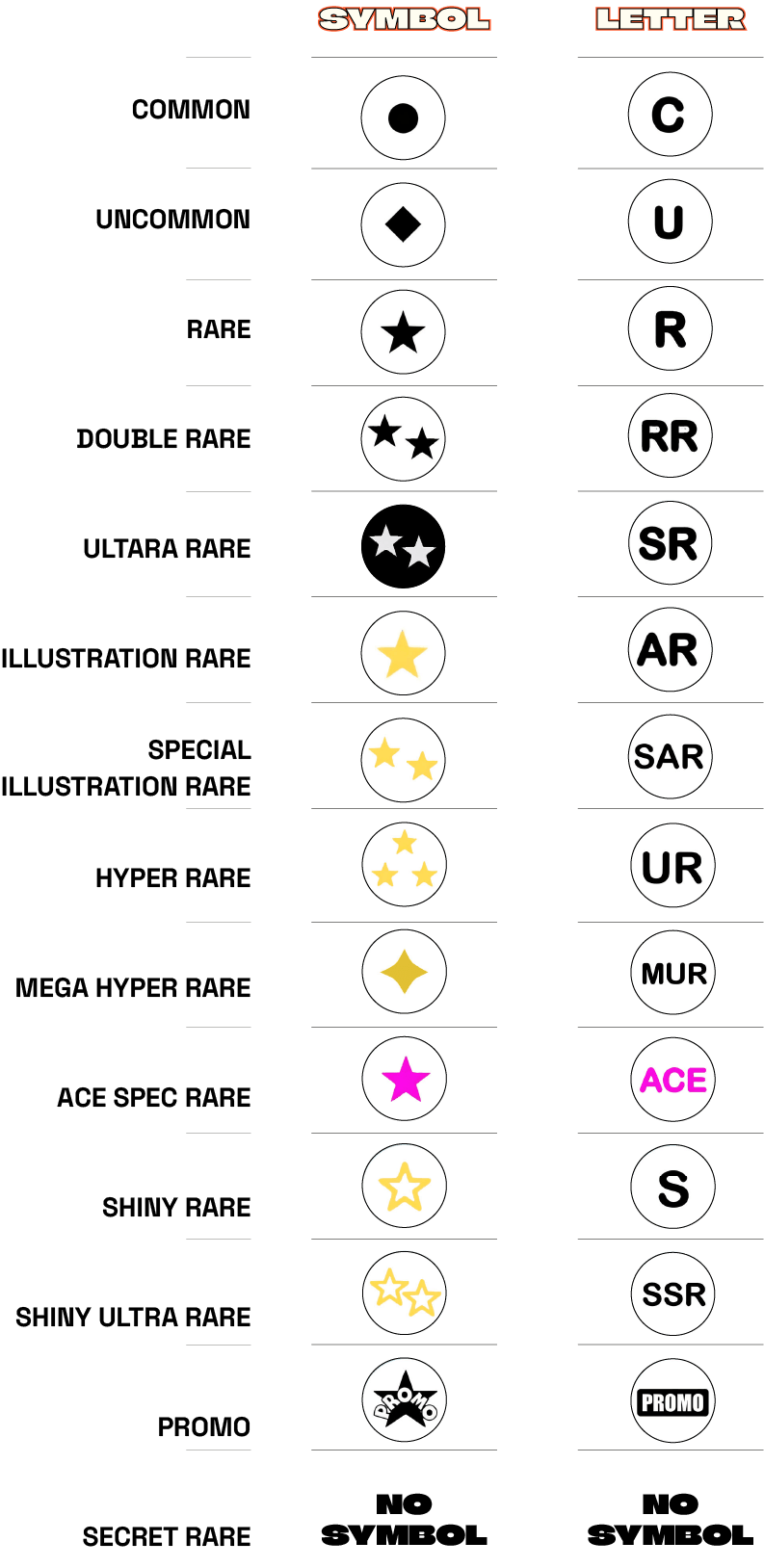
Basic Pokémon Card Rarity Symbols
Advanced Rarity Types in Pokémon Cards
Modern Pokémon sets include additional rarity tiers beyond the basic system:
| Type | Identifier | Key Features | Estimated Pull Rate |
|---|---|---|---|
| Holo Rare | ★ + holographic artwork | Shiny image area | ~1 per pack |
| Reverse Holo | Holographic background | Card surface shines | ~1 per pack |
| Ultra Rare | EX / GX / V cards | Full art or textured | 1 in 6–12 packs |
| Secret Rare | Number exceeds set total | Hidden numbering | 1 in 20–50 packs |
These categories significantly increase both collectibility and value.
Premium & High-Value Rarity Tiers
Recent expansions have introduced premium rarities that are highly sought after:
| Rarity Tier | Visual Features | Difficulty | Collector Value |
|---|---|---|---|
| Rainbow Rare (Hyper Rare) | Rainbow foil design | Very rare | Very high |
| Gold Cards | Gold borders or full gold design | Extremely rare | Extremely high |
| Illustration Rare | Detailed artwork scenes | Rare | High |
| Alternate Art | Unique full-art designs | Rare | Very high |
These cards often represent the most valuable pulls in modern Pokémon sets.
How to Identify Pokémon Card Rarity Accurately
To correctly determine Pokemon Cards Rarity, use this checklist:
| Factor | What to Look For | Why It Matters |
|---|---|---|
| Symbol | Circle, Diamond, Star | Indicates base rarity |
| Card Number | Exceeds set total? | Identifies secret rares |
| Foil Pattern | Holo vs non-holo | Signals higher tiers |
| Texture | Smooth vs textured | Premium cards often textured |
| Set Info | Expansion details | Confirms rarity structure |
Using all these factors together ensures accurate identification.
Why Rarity Matters for Value
Rarity plays a major role in determining a card’s value, but it works alongside other factors:
| Factor | Impact on Value |
|---|---|
| Rarity | Higher rarity = higher potential value |
| Condition | Mint cards are worth significantly more |
| Popularity | Characters like Charizard increase value |
| Print Run | Limited supply increases demand |
| Artwork | Unique designs boost desirability |
For example, a rare Charizard card in perfect condition can be worth thousands, while a common card may hold minimal value.
The Impact of the Recent Pokémon Card Boom
The 2024–2026 surge in Pokémon card demand has reshaped the market:
| Trend | Effect on Market |
|---|---|
| Increased collectors | Higher competition for rare cards |
| Social media influence | More awareness and hype |
| Grading services growth | Higher value for graded cards |
| Reselling culture | Price inflation on rare items |
This makes understanding Pokemon Cards Rarity essential for smart collecting.
Common Mistakes When Identifying Rarity
Avoid these frequent beginner mistakes:
| Mistake | Why It’s Wrong |
|---|---|
| Confusing holo with rare | Not all holo cards are high value |
| Ignoring numbering | Misses secret rares |
| Assuming shiny = valuable | Many shiny cards are common |
| Skipping condition check | Condition heavily impacts value |
Final Thoughts: Mastering Pokemon Cards Rarity
Understanding Pokemon Cards Rarity is essential for anyone serious about collecting or investing in Pokémon cards. With the hobby growing rapidly, accurate knowledge is your biggest advantage. By learning symbols, recognizing advanced rarity tiers, and analyzing card features correctly, collectors can confidently navigate the market and build valuable collections.
FAQs About Pokemon Cards Rarity
| Question | Answer |
|---|---|
| What is the rarest Pokémon card type? | Secret Rare and Gold cards are among the rarest |
| Where is the rarity symbol located? | Bottom corner near the card number |
| Are holo cards always valuable? | No, value depends on rarity and condition |
| What does a star symbol mean? | It indicates a rare card |
| What is a Secret Rare? | A card numbered beyond the set total |
| Why are Pokémon cards popular again? | Nostalgia, social media, and investment demand |